
Low-Tox Home
What’s Really in San Antonio Tap Water? A Crunchy Guide to Cleaner Water at Home
San Antonio is known for its very hard water—but minerals aren’t the only thing worth understanding about what comes out of the tap. This guide breaks down local water quality, including chlorine, fluoride, lead, PFAS, and other concerns, plus practical filtration options for families who want cleaner water at home.
The Crunch List Editorial Team · October 7, 2026 · 13 min read
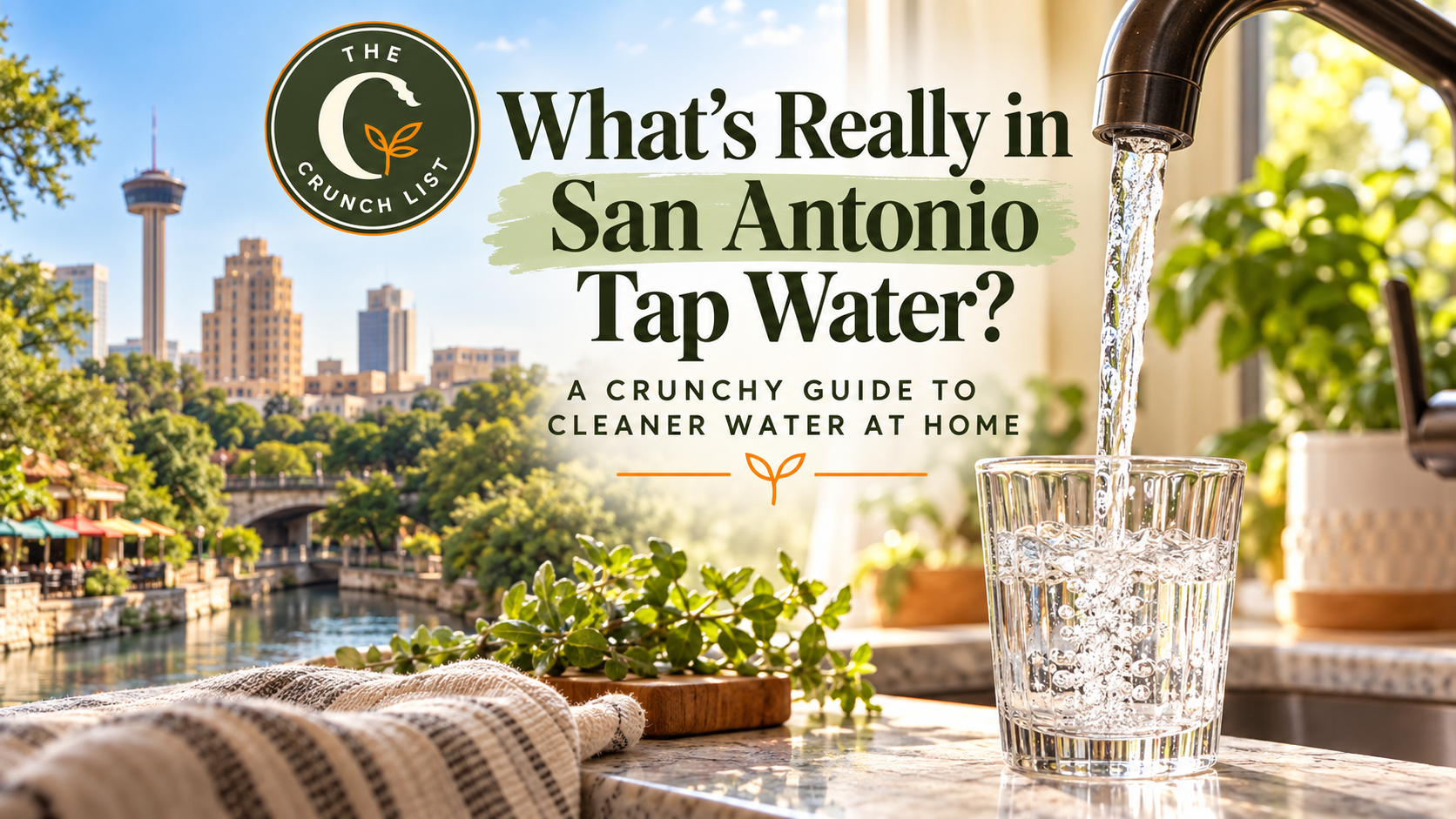
Hard water, chlorine, fluoride, PFAS, lead, filters, reverse osmosis and more — here’s what San Antonio families should know about the water coming from the tap.
If you’ve lived in San Antonio for any length of time, you’ve probably seen the evidence.
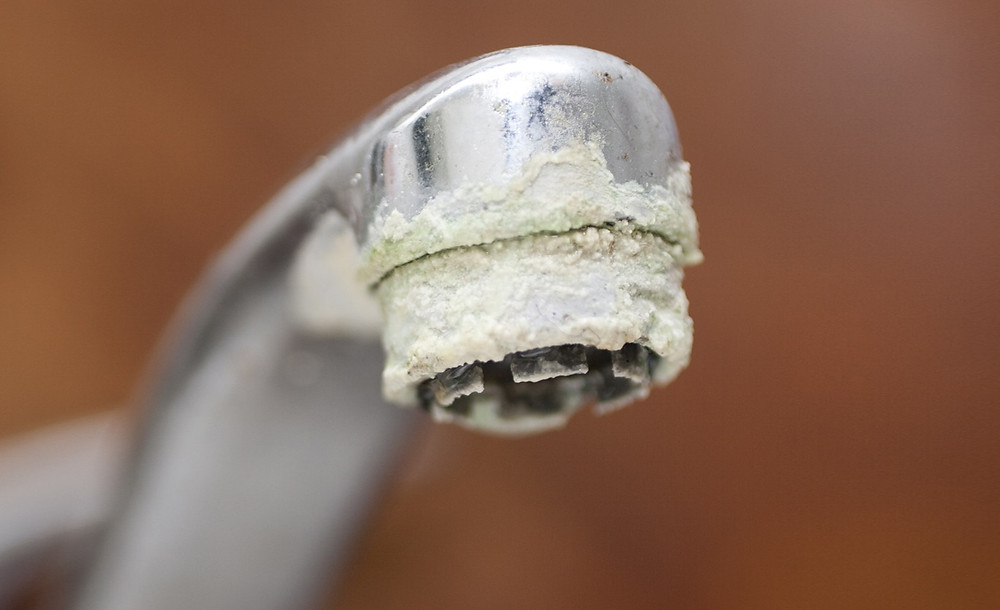
White crust around the faucet.
Spots covering freshly washed glasses.
Scale inside the coffee maker.
Shower doors that never quite look clean.
San Antonio is known for very hard water — but minerals aren’t the only thing worth understanding about what comes out of our faucets.
San Antonio Water System (SAWS) treats and monitors its water to meet federal and state drinking-water requirements. According to the latest 2026 Water Quality Report, the SAWS main system received no drinking-water violations in 2025. San Antonio Water System
That’s important context.
But “meets drinking-water standards” doesn’t necessarily mean every family will choose to drink the water exactly as it comes from the tap.
For those of us trying to make thoughtful, lower-tox choices at home, water can feel especially confusing.
Do you need a whole-house filter?
Is reverse osmosis worth it?
Does a water softener actually purify your water?
What about chlorine, fluoride, lead or PFAS?
Let’s break down what San Antonio families should know — without fear, hype or complicated water-filter marketing.
First: Where Does San Antonio’s Water Come From?
If you grew up here, you probably associate San Antonio water with one thing:
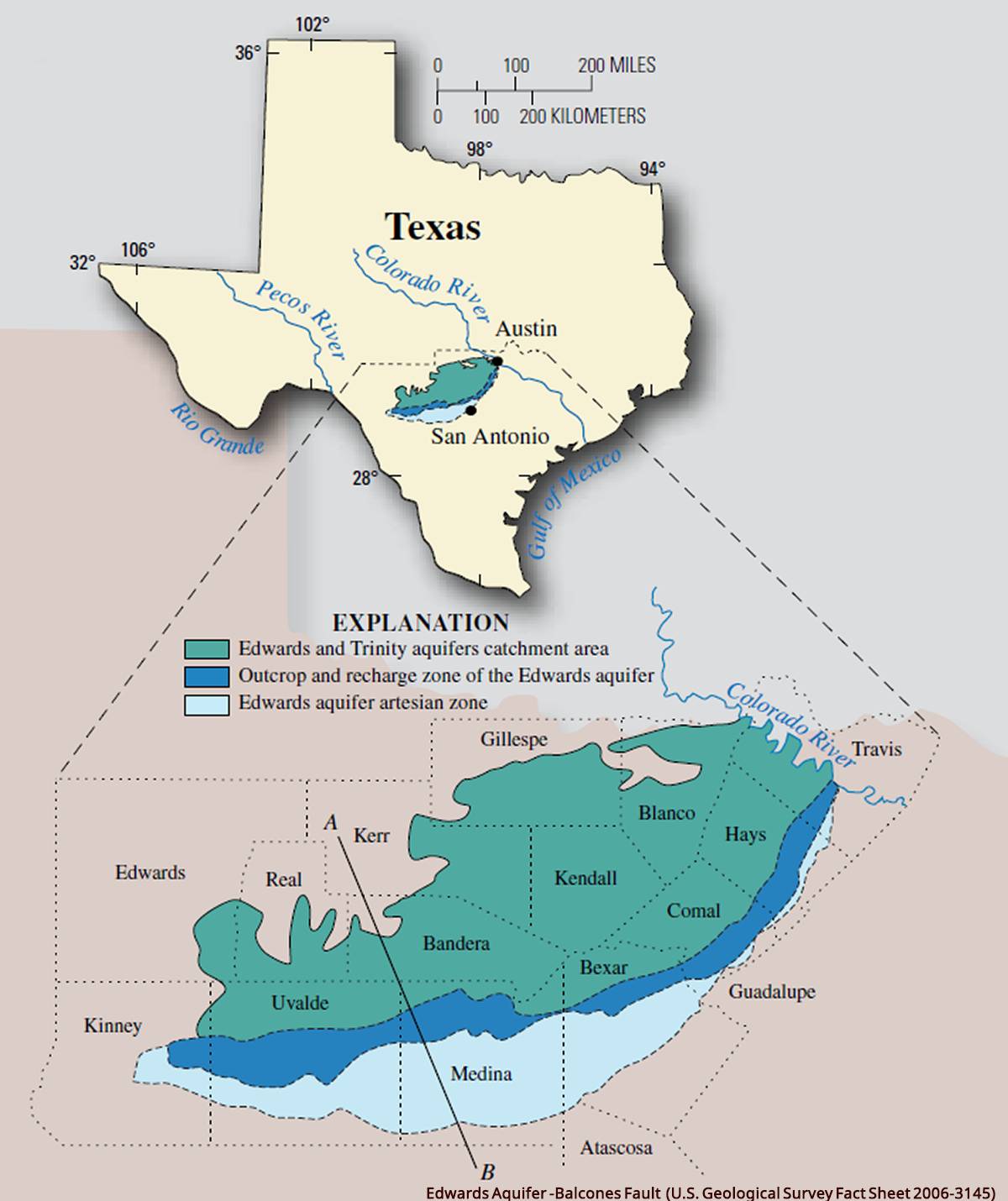
The Edwards Aquifer.
And the Edwards Aquifer remains an incredibly important part of our water supply.
But today, San Antonio has a much more diverse water portfolio. SAWS receives water from multiple groundwater sources and regional water projects rather than relying exclusively on the Edwards Aquifer.
That diversity helps San Antonio meet the water needs of a growing metropolitan area.
It also means the exact characteristics of water coming from the tap may vary depending on the water source supplying your part of the system.
Still, there are several characteristics that San Antonio households encounter again and again.
1. Yes, San Antonio Has VERY Hard Water
This one probably isn’t news to anyone who has scrubbed a San Antonio shower door.
SAWS says the typical hardness of the water it provides ranges from approximately 15 to 20 grains per gallon.
That qualifies as very hard water.
The hardness is primarily caused by naturally occurring calcium and magnesium that dissolve into groundwater as it moves through limestone and rock. SAWS notes that hard water itself is not considered a health hazard. San Antonio Water System
But it can definitely make itself known around your house.
Hard water may contribute to:
• White mineral deposits around faucets and fixtures • Cloudy spots on glasses and dishes • Scale inside coffee makers and kettles • Mineral buildup on shower heads • Soap that doesn’t lather as easily • Buildup inside water heaters and appliances • Stubborn residue on shower doors
If you’ve wondered why keeping faucets and shower glass spotless in San Antonio feels like a full-time job…
There’s your answer.
But here’s an important distinction:
A water softener is not the same thing as a water filter.
Traditional ion-exchange water softeners are designed primarily to reduce the calcium and magnesium responsible for hardness.
They are not automatically designed to remove things such as chlorine, fluoride, lead or PFAS.
So if your goals are both softer water throughout your home AND cleaner drinking water, you may ultimately want two different types of treatment.
2. San Antonio Water Is Disinfected With Chlorine
Municipal water systems need to control microorganisms as water travels through miles of pipes before arriving at homes and businesses.
SAWS uses free chlorine as a disinfectant.
The 2026 Water Quality Report lists an average free-chlorine residual of approximately 1.47 ppm in the SAWS main system during 2025. The regulatory maximum residual disinfectant level is 4 ppm. San Antonio Water System
Chlorine serves an important public-health purpose.
But some households prefer to reduce the chlorine remaining in their water before drinking or cooking with it — especially because it can affect the taste and smell of tap water.
What can reduce chlorine?
One of the most common options is:
Activated carbon filtration.
Carbon filters can be very effective for reducing chlorine taste and odor.
But don’t assume every filter performs equally.
Look for filters that have been independently certified for the specific reduction claim you care about.
NSF/ANSI Standard 42 commonly covers aesthetic concerns including chlorine, taste and odor. NSF
3. What About Chlorine Byproducts?
This part of the conversation gets a little more interesting.
When chlorine reacts with naturally occurring organic material in water, it can create compounds called disinfection byproducts.
Two major groups are:
Trihalomethanes (TTHMs)
and
Haloacetic Acids (HAA5).
These aren’t unique to San Antonio. They’re monitored in chlorinated municipal water systems throughout the country.
According to SAWS’s 2026 Water Quality Report, the main system reported a highest locational annual average of:
30.6 parts per billion for HAA5
and
86.2 parts per billion for TTHMs.
The federal maximum contaminant levels are 60 ppb for HAA5 and 80 ppb for TTHMs. Importantly, compliance for these compounds is based on required locational running averages rather than simply comparing a single individual sample with the regulatory number. SAWS reported no violation for either category. San Antonio Water System
That distinction matters.
Seeing one number above 80 does not automatically mean the water system exceeded its regulatory standard.
For families who simply want to reduce their exposure further, appropriately selected activated-carbon filtration is one option worth researching.
4. Yes, San Antonio Adds Fluoride to the Water
Fluoride already occurs naturally in San Antonio groundwater.
According to SAWS, naturally occurring fluoride is typically around 0.3 parts per million.
SAWS adds fluoride to bring many portions of the water supply to approximately 0.7 ppm, the concentration recommended for community water fluoridation.
Some water sources, including portions of the Trinity Aquifer supply, naturally contain fluoride near that level and may not require additional fluoride. San Antonio Water System
The latest SAWS report lists fluoride concentrations reaching approximately 0.69 ppm in the main system during 2025. San Antonio Water System
Whether your family wants fluoride in drinking water is a personal decision.
But if reducing fluoride is one of your goals, it’s important to know:
A basic carbon filter generally isn’t the filtration method to rely on for fluoride reduction.
Reverse osmosis is one of the more commonly used household technologies for reducing fluoride.
SAWS itself identifies reverse osmosis as an option for customers who want to remove fluoride from their drinking water. San Antonio Water System
When shopping for an RO system, look beyond the words “reverse osmosis” on the box.
Check the system’s independent certification and its specific contaminant reduction claims.
NSF/ANSI 58 is the primary standard associated with residential reverse-osmosis systems. NSF
5. What About Lead?
Lead is a little different because the water leaving the treatment facility isn't necessarily the whole story.
Lead can enter drinking water through:
• Older service lines • Household plumbing • Older solder • Faucets and fixtures
In other words, your individual home matters.
SAWS's latest monitoring at customer taps reported a 90th-percentile lead level of 1.6 ppb, with zero monitoring sites exceeding the applicable 15 ppb action level in that sampling round. San Antonio Water System
Still, an older home's plumbing or service line could create conditions that are very different from another house across town.
That’s why SAWS has created Project Lead.
SAWS is building an inventory of the material used in water service lines throughout San Antonio and currently offers free inspections for some properties with unknown service-line materials.
SAWS notes that homes built before 1989 may have service lines containing lead material, while most homes built after 1989 are less likely to have them because of building-code changes. San Antonio Water System
Do you own an older San Antonio home?
This is one situation where it makes sense not to guess.
Check your service-line information and consider testing the water coming from your actual faucet.
And if lead reduction is one of your priorities, look for a filter specifically certified for lead reduction.
“Water filter” alone doesn't tell you what a product removes.
6. What About PFAS?
You've probably heard PFAS referred to as:
“Forever chemicals.”
PFAS are a large group of synthetic chemicals historically used in products and applications including:
• Nonstick coatings • Stain-resistant materials • Water-resistant materials • Certain industrial processes • Some firefighting foams
Because some PFAS chemicals persist in the environment for a very long time, they've become an increasing focus of drinking-water monitoring and regulation.
This is also an area where it's important not to sensationalize San Antonio's current water data.
SAWS's latest published drinking-water information does not indicate a widespread PFOA/PFOS drinking-water violation in the main system.
But families who want to reduce PFAS exposure can still choose filtration designed specifically for it.
The EPA advises consumers looking for PFAS filtration to look for systems certified to:
NSF/ANSI 53
or
NSF/ANSI 58
with the appropriate PFAS reduction claim. US EPA
Depending on the specific system, technologies used for PFAS reduction can include:
• Activated carbon • Ion-exchange media • Reverse osmosis
Again, the key isn't simply purchasing something labeled “water filter.”
It's verifying exactly what that particular filter has been tested and certified to reduce.
7. One Interesting Number in San Antonio’s Latest Report: Lithium
Here's one you probably haven't heard discussed around the dinner table.
As part of EPA's monitoring for unregulated contaminants, SAWS reported lithium in its latest testing.
The 2026 report lists an average lithium concentration of approximately:
15.6 parts per billion
with detected levels ranging from:
13.1 to 17.2 ppb.
The report also lists a non-regulatory health-based reference concentration of 10 ppb. San Antonio Water System
It is important to understand what that means — and what it doesn't.
Lithium currently does not have a federal maximum contaminant level for drinking water.
So this does not represent a violation of a federal drinking-water standard.
Instead, lithium is one of the substances being monitored under EPA's Unregulated Contaminant Monitoring Rule.
And that highlights something important about water quality.
“Meets current drinking-water standards” and “contains absolutely nothing you may personally want to reduce” are not the same statement.
Drinking-water science continues to evolve.
Researchers identify emerging contaminants.
EPA collects nationwide monitoring data.
Regulatory standards can change as the science develops.
That is one reason some families choose additional filtration even when their municipal water meets current standards.
So… What’s the Best Water Filter for San Antonio?
Here's where water filtration gets much simpler.
Instead of asking:
“What is the best water filter?”
Ask:
“What am I trying to remove?”
Because there isn't one perfect answer for every household.
If Your Biggest Problem Is Hard Water and Scale…
Consider a:
WATER SOFTENER
A traditional water softener targets the calcium and magnesium responsible for San Antonio's extremely hard water.
It can help reduce:
• Mineral scale • Spots on fixtures • Appliance buildup • Soap performance issues
But remember:
Soft water isn't automatically filtered drinking water.
If You Mainly Want Better-Tasting Water and Less Chlorine…
Consider:
ACTIVATED CARBON FILTRATION
Carbon can be very effective for reducing chlorine taste and odor.
Look for appropriate independent certification, such as NSF/ANSI 42 for relevant aesthetic claims. NSF
If You Want Broader Contaminant Reduction…
Consider:
A HIGH-QUALITY UNDER-SINK FILTER
Look at the system's performance data sheet.
Depending on the product, an under-sink filter may be certified to reduce substances such as:
• Lead • Certain VOCs • Chlorine • Some disinfection byproducts • Certain PFAS
But don't assume.
Check the exact certification.
If You Want to Reduce Fluoride and Many Dissolved Substances…
Consider:
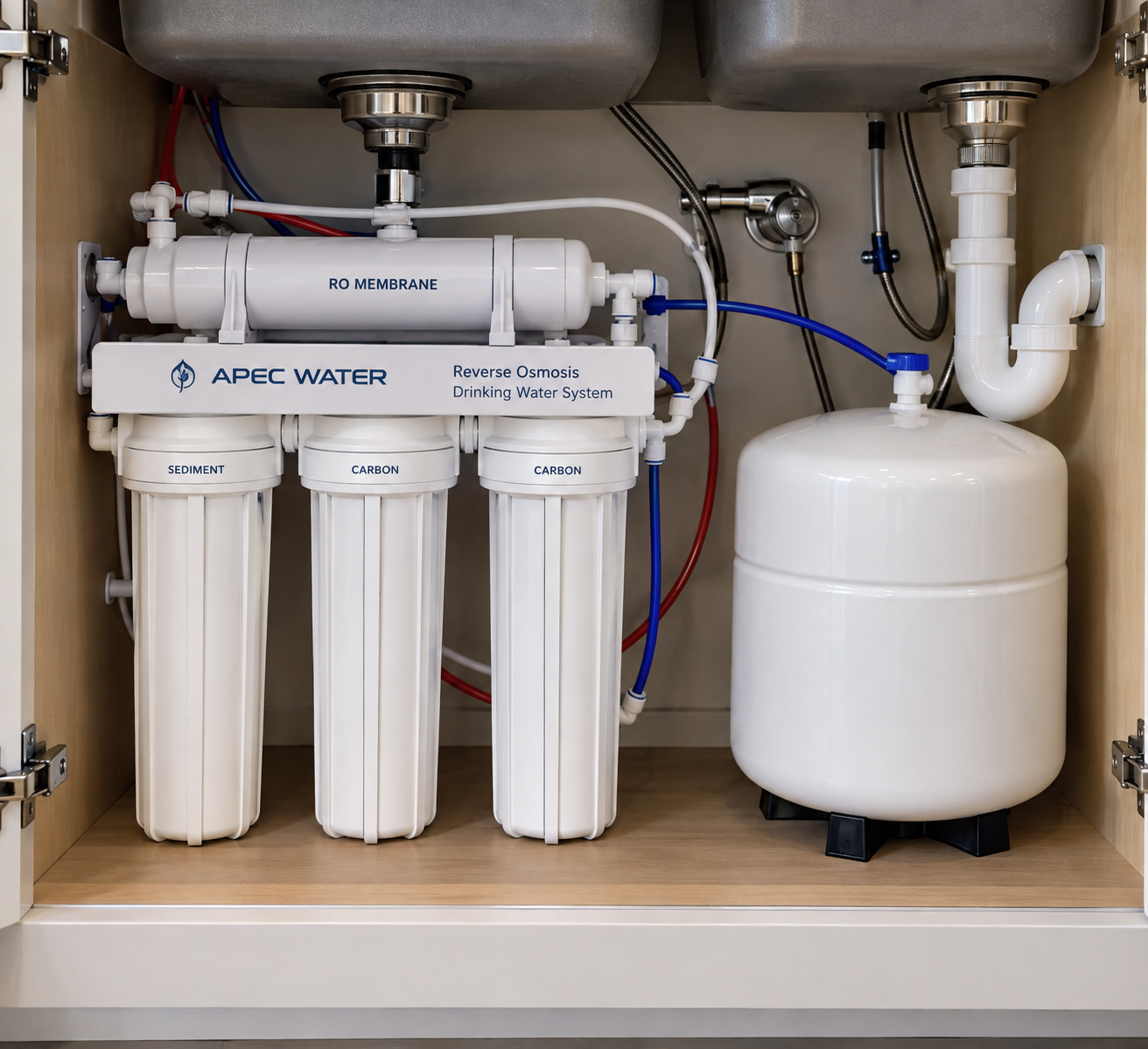
REVERSE OSMOSIS
For drinking and cooking water, an under-sink reverse-osmosis system can provide much broader filtration than a simple refrigerator or pitcher filter.
RO systems push water through a semipermeable membrane, reducing many dissolved substances.
NSF/ANSI 58 is the primary standard associated with residential reverse-osmosis systems. NSF
But even with RO:
Always check the specific reduction claims for the individual system.
Whole-House Filter or Under-Sink Filter?
This is probably the next question.
Here's the easiest way to think about it.
WHOLE-HOUSE TREATMENT
Whole-house systems make the most sense when you're trying to address water throughout the home.
Depending on the system, that might include:
• Hardness • Sediment • Chlorine • Scale • Taste and odor
POINT-OF-USE FILTRATION
Point-of-use filtration treats the water you're actually consuming.
That includes water used for:
• Drinking • Cooking • Coffee and tea • Baby formula • Filling reusable bottles • Pet water
For many San Antonio families, a combination may make the most sense:
Whole-house softening or filtration + high-quality drinking-water filtration at the kitchen sink.
After all, you probably don't need reverse-osmosis water filling your toilet tank.
One Thing We Wouldn’t Do: Choose a Filter Based on Marketing Alone
Water-filter marketing can get wild.
“Pure.”
“Detox.”
“Toxin-free.”
“Removes 99% of contaminants.”
Sounds great.
But those phrases don't tell you enough.
Instead, ask:
What exactly has this filter been independently tested to reduce?
NSF explains that certification standards apply to particular types of treatment and individual contaminant-reduction claims.
Here are several certifications worth knowing:
NSF/ANSI 42
Typically relates to aesthetic effects such as:
• Chlorine • Taste • Odor
NSF/ANSI 53
Covers health-related contaminant reduction claims.
Depending on the system and certification, that can include substances such as lead or certain other contaminants.
NSF/ANSI 58
Applies to reverse-osmosis systems and their performance/reduction claims.
NSF specifically advises consumers to check both the standard AND the particular contaminant claim.
A product saying it is “NSF certified” does not automatically mean it removes every contaminant associated with that standard. NSF
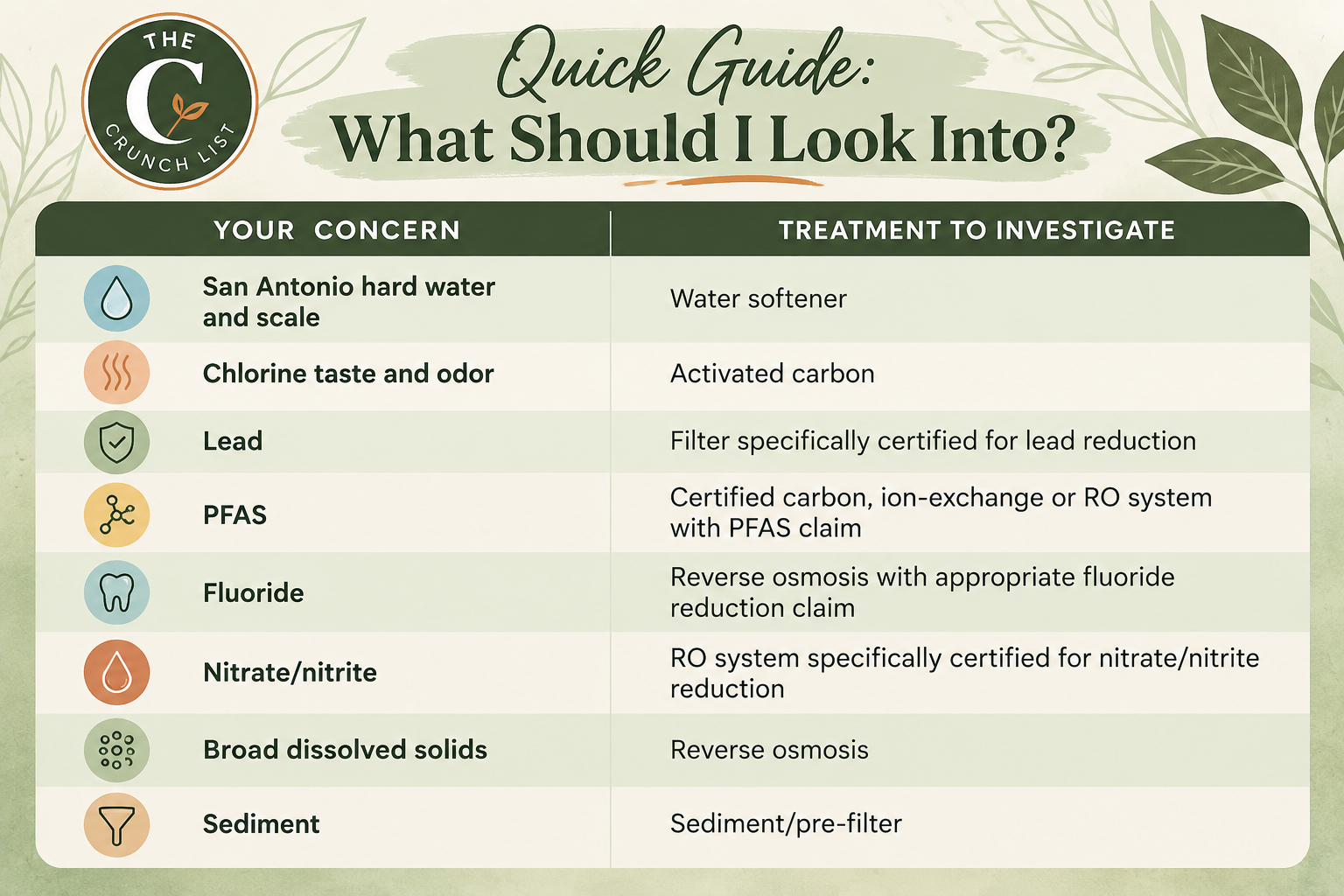
IMPORTANT: A treatment technology doesn't automatically remove everything listed simply because it falls into that category.
Always verify the exact contaminant-reduction claims for the individual system.
Don't Forget the Most Important Part: Change Your Filters
Even the best filtration system won't work indefinitely.
Carbon media becomes exhausted.
Sediment filters clog.
RO membranes eventually need replacement.
The EPA emphasizes that water filters must be maintained according to manufacturer instructions and replaced on schedule in order to continue performing properly. US EPA
So if you've had the same refrigerator filter since the Spurs' last playoff run…
Consider this your friendly reminder.
The Crunch List Bottom Line
San Antonio's municipal water is routinely tested, and SAWS's latest Water Quality Report states that the main system received no violations in 2025. San Antonio Water System
At the same time, San Antonio households deal with some very real water characteristics:
Very hard water.
Chlorine.
Disinfection byproducts.
Added fluoride.
Potential plumbing-related lead in older homes.
And emerging contaminants that continue to be studied.
You don't have to panic about your water.
But you can be informed about it.
For families who want cleaner water at home, a good starting point is surprisingly simple:
1. Find out what’s actually in your water.
2. Decide what you personally want to reduce.
3. Choose a filtration system independently certified to do exactly that.
4. Maintain it properly.
That's the kind of crunchy living we can get behind.
Not fear. Not perfection.
Just becoming a little more intentional about what comes into our homes.
Want to Go One Step Further?
Before investing thousands of dollars in a whole-house filtration system, consider testing the water coming from your own home.
Your home's age, plumbing materials, service line and water source can influence what ultimately comes out of your faucet.
And if you own an older San Antonio home, check your service-line material through SAWS's Project Lead program.
SAWS may provide a free service-line inspection for eligible properties where the line material is currently unknown. San Antonio Water System
________________________________
SOURCES
San Antonio Water System — 2026 Water Quality Report The primary source for current San Antonio water-quality testing, chlorine, fluoride, lead, disinfection byproducts and lithium. SAWS 2026 Water Quality Report
SAWS — 2026 Water Quality Report Announcement Your 2026 Water Quality Report
SAWS — Water Quality FAQs Information about San Antonio water hardness, chlorine and common water-quality questions. SAWS Water Quality FAQs
SAWS — Fluoride FAQs Information about naturally occurring fluoride, fluoridation levels and reverse-osmosis filtration. SAWS Fluoride Information
SAWS — Project Lead Information about San Antonio service lines, lead and available inspections. SAWS Project Lead
SAWS — Water Service Line Inventory SAWS Service Line Inventory
U.S. Environmental Protection Agency — PFAS Home Filtration Information about home filtration technologies and PFAS filter certification. EPA: Reducing PFAS in Your Drinking Water With a Home Filter
EPA — Identifying Drinking Water Filters Certified to Reduce PFAS EPA PFAS Filter Certification Guide
NSF — Standards for Water Treatment Systems Explanation of NSF/ANSI 42, 53, 58 and other filtration standards. NSF Water Treatment Standards